Introduction
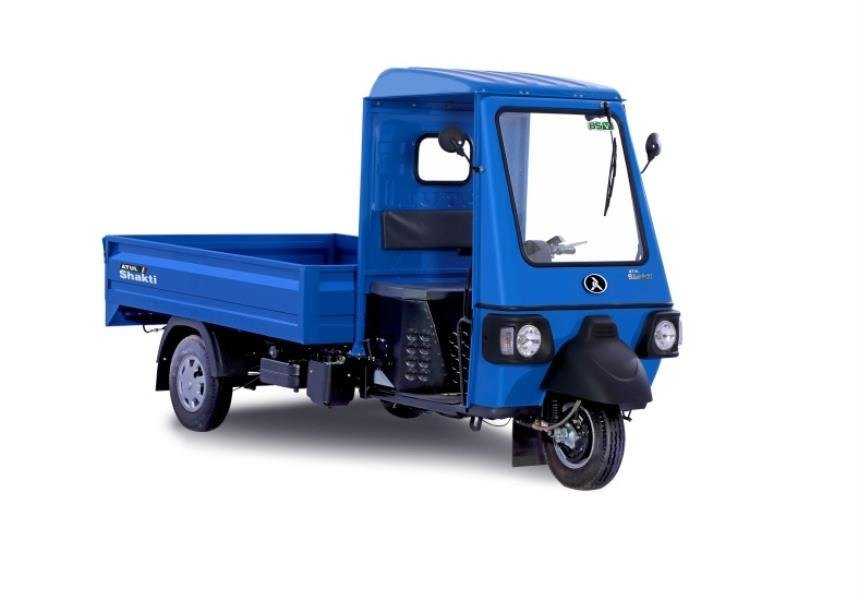
Atul Auto Limited is a Rajkot-based Indian commercial vehicle manufacturer that has quietly built a significant and growing presence in India’s highly competitive three-wheeler market, competing against dominant players including Bajaj, TVS, and Piaggio with vehicles that offer strong value propositions on price, fuel efficiency, and load capacity. The Atul Shakti is the company’s flagship passenger auto rickshaw model — a three-wheeled vehicle designed specifically for the Indian urban and semi-urban passenger transport market with a focus on operational economics that appeal strongly to owner-operators for whom every rupee of per-kilometre cost directly affects their monthly net income.
Atul Shakti Auto Price and Variants
The Atul Shakti is available in both petrol and CNG fuel configurations, with pricing that is positioned competitively below the established market leaders — a deliberate strategy to attract cost-sensitive buyers including first-time owner-operators and fleet buyers managing multiple vehicles. Ex-showroom prices for the Atul Shakti typically range from approximately ₹2.2 lakh to ₹2.8 lakh depending on the fuel type, state, and applicable taxes. This pricing positions the Atul Shakti at the value end of the passenger auto segment, making it particularly attractive to buyers in tier-2 and tier-3 cities where income levels and passenger fare structures make lower acquisition cost a more significant purchase criterion than it might be in larger metro markets. On-road prices including registration, insurance, and applicable taxes typically add ₹25,000 to ₹50,000 above the ex-showroom figure. Always confirm current pricing with an Atul Auto authorised dealer as prices are subject to change based on fuel type revision, state regulation, and market conditions.
Engine Specifications and Performance
The Atul Shakti is powered by a compact single-cylinder four-stroke engine in its petrol configuration, engineered for the stop-start, low-speed, heavily-loaded operating conditions that define urban Indian auto rickshaw use. Key performance priorities for the Shakti’s engine include strong low-speed torque for loaded starting, adequate power for the gradient changes common in Indian city environments, and long service intervals that reduce the maintenance burden for owner-operators who may not have convenient access to authorised service facilities. The CNG variant adapts the same engine architecture for compressed natural gas operation, providing lower per-kilometre fuel cost in cities where CNG infrastructure is well-developed, including Delhi, Mumbai, Pune, and several other major urban centres. Atul’s engineering team has prioritised thermal durability in markets where continuous operation in hot ambient conditions is the norm rather than the exception.
Fuel Economy and Total Operating Economics
For the owner-operator evaluating the Atul Shakti as a livelihood tool, the vehicle’s operating economics are the central purchase criterion. The Shakti petrol variant delivers fuel economy in the range of 30 to 36 km per litre under typical mixed urban operating conditions. CNG variants, where available, provide further per-kilometre cost savings given the price differential between CNG and petrol in India’s commercial fuel market. Atul Auto positions the Shakti as offering among the lowest total cost of ownership in its segment — a claim supported by the competitive acquisition price, modest routine maintenance cost, and the wide availability of spare parts through the company’s dealer and distributor network, which has expanded significantly in recent years beyond Atul’s traditional stronghold in Gujarat and Rajasthan into other states.
Atul Auto’s Expanding Dealer Network
Historically, Atul Auto’s sales were concentrated in Gujarat and Rajasthan, where the company’s Rajkot headquarters provides geographic proximity and where the Atul brand has the longest established customer relationships. In recent years, Atul has executed a deliberate expansion of its dealer and service network into other high-potential states including Maharashtra, Uttar Pradesh, Madhya Pradesh, and others. This expansion is critical for the brand’s commercial ambitions, as service network coverage is one of the primary purchase criteria for owner-operators who cannot afford extended downtime and who need accessible parts supply for routine maintenance and repairs. As the network grows, Atul’s value-pricing strategy becomes more viable in geographies where previously the absence of nearby authorised service would have made purchase risky regardless of the vehicle’s economics.
Electric Future: Atul’s EV Three-Wheeler Ambitions
Atul Auto has entered India’s growing electric three-wheeler segment, recognizing that the transition to electric mobility in commercial urban transport is not a question of if but when. Electric three-wheeler variants address the same operator economics logic that drives Atul’s combustion vehicle value positioning — even lower per-kilometre fuel (electricity) cost, reduced maintenance complexity, and government subsidy support that reduces effective acquisition cost for qualifying buyers. The electric segment also opens new competitive dynamics, as the market leader advantages that Bajaj and TVS enjoy in the established combustion three-wheeler market are less entrenched in a nascent electric segment where multiple players are starting from relatively equal footing. Atul’s electric three-wheeler development reflects the broader Indian automotive industry’s acceleration toward electrification of the commercial last-mile transport sector.
Frequently Asked Questions
Is Atul Auto a reliable brand? Atul Auto has been manufacturing three-wheelers since 1986 and has a growing customer base primarily in western India — reliability feedback from operators in established markets is generally positive. How does the Atul Shakti compare to Bajaj RE? The Shakti’s main competitive advantage is lower acquisition price; Bajaj RE’s advantages include wider spare parts availability nationwide and larger market share that implies easier resale. Where can I buy an Atul Shakti? Atul Auto’s dealer locator on its official website identifies authorised dealers by state and city.
Atul Shakti Safety and Emission Compliance
The Atul Shakti auto rickshaw is designed to comply with Bharat Stage VI emission standards that became mandatory for all new commercial vehicles in India from April 2020. The transition to BS6-compliant powertrains required significant engine management investment from manufacturers across the three-wheeler segment, and the Atul Shakti range reflects this regulatory compliance. Safety features include structural protection inherent in the three-wheeler chassis design, regulatory-compliant lighting systems for safe night operation, and horn and mirror requirements meeting applicable Indian standards. Atul Auto continues developing its passive safety elements in line with progressively more stringent commercial vehicle safety regulations that central and state government bodies are introducing as road safety receives increasing policy attention across India. For commercial passenger operations, buyers must also ensure they obtain the appropriate commercial vehicle permit from their Regional Transport Office before commencing revenue-generating operations, and that the vehicle configuration meets the requirements of the permit category applicable in their operating state.
Conclusion
The Atul Shakti auto rickshaw presents a genuinely competitive value proposition for price-sensitive buyers in India’s three-wheeler passenger transport segment — particularly in states and cities where Atul’s dealer network provides adequate service coverage. Its combination of competitive acquisition pricing, adequate operational performance, and growing network presence makes it an increasingly credible alternative to established market leaders for owner-operators who prioritise total cost of ownership above brand prestige.